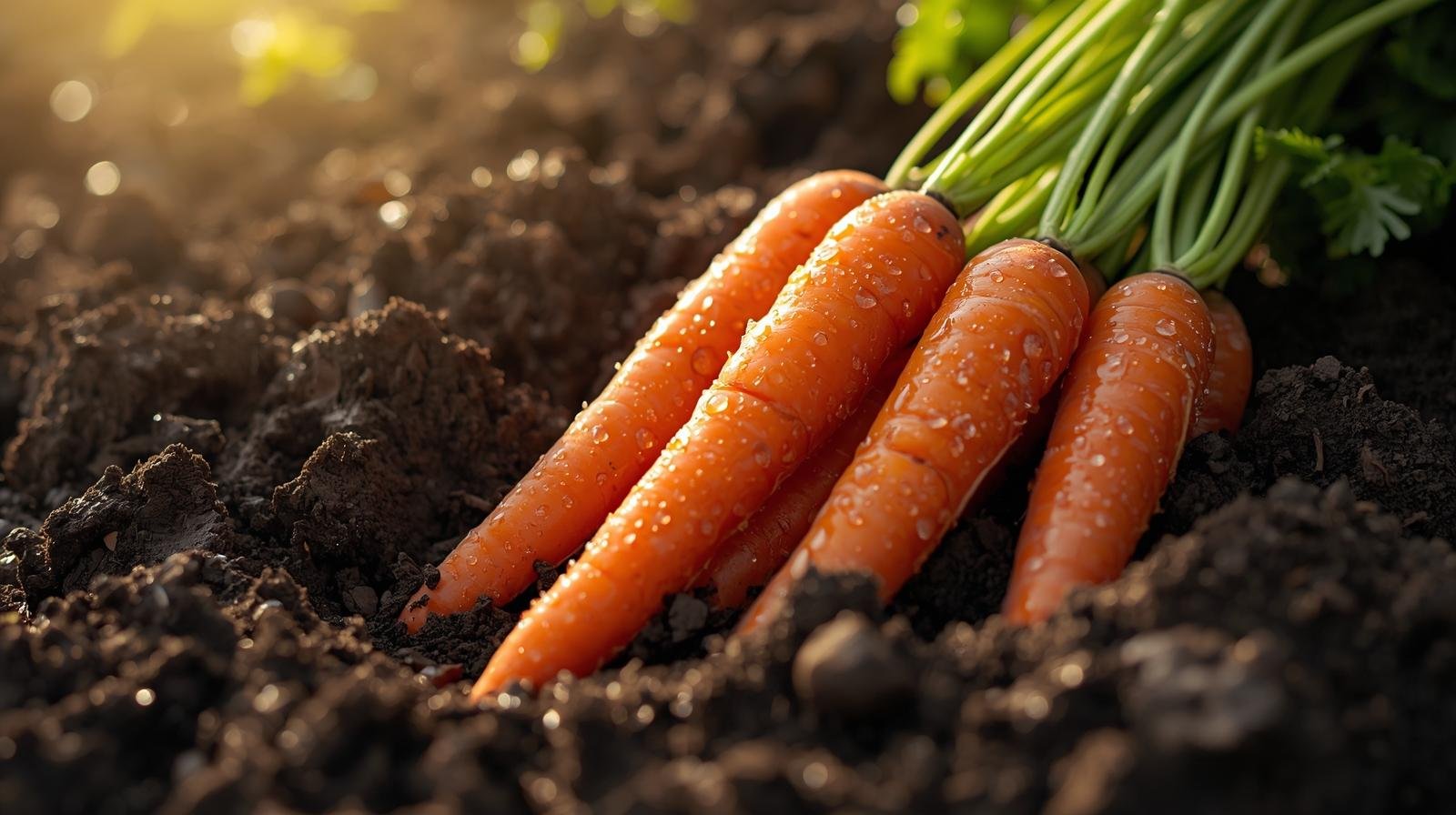
Carrot Farming Guide: Complete Cultivation Practices with Fruit Crop Intercropping

Carrot Farming Guide: Complete Cultivation Practices with Fruit Crop Intercropping

By Farming Acre – Go Green and Earn Green

Carrot (Daucus carota) is one of the most popular and profitable root vegetables cultivated across India and many parts of the world. Known for its high beta-carotene, fiber, and antioxidant content, carrot has strong demand in fresh vegetable markets, juice industries, food processing units, and health sectors. At Farming Acre, we focus on promoting scientific, sustainable, and income-boosting farming models. Carrot cultivation, when combined with suitable fruit crops, can become a powerful system for both short-term and long-term profit.

This detailed guide explains how to farm carrots step-by-step and how to grow a fruit crop along with carrots to maximize land utilization.

🌱 1. Climate and Soil Requirement

Carrot is a cool-season crop.

  • Ideal temperature: 15°C – 25°C

  • High temperature reduces color and sweetness

  • Requires good sunlight for healthy root development

Soil:

  • Deep, loose, sandy loam soil is best

  • Free from stones and clods

  • pH range: 5.5 – 7.0

Avoid heavy clay soil as it leads to forked, deformed roots. At Farming Acre, we strongly recommend deep ploughing and organic matter enrichment before sowing.

🚜 2. Land Preparation

Proper soil preparation is the foundation of straight, long carrots.

  • 2–3 deep ploughings

  • Break all clods and remove stones

  • Prepare raised beds or flat fine seedbeds

Apply 8–10 tons of well-decomposed farmyard manure per acre during final ploughing.

If soil is heavy, mix sand and compost to improve looseness.

🌾 3. Seed Selection and Sowing

Carrot is grown by direct seeding.

Recommended varieties:

  • Pusa Kesar

  • Nantes

  • Pusa Meghali

  • New Kuroda

Seed rate:

  • 3–4 kg per acre

Sowing time:

  • North India: September – November

  • South India: October – January

Spacing:

  • Row to row: 30 cm

  • Plant to plant: 7–10 cm

Seeds should be sown 1–1.5 cm deep. Light irrigation must be given immediately.

💧 4. Irrigation Management

Carrot requires light but frequent irrigation.

  • First irrigation: Immediately after sowing

  • Then: Every 6–8 days

  • Avoid water stress during root formation

  • Avoid waterlogging to prevent rotting

Drip irrigation gives better root shape and higher yield.

🌿 5. Nutrient Management

Balanced nutrition ensures sweet, crunchy carrots.

Per acre recommendation:

  • Nitrogen: 30 kg

  • Phosphorus: 25 kg

  • Potassium: 25 kg

Apply:

  • Full phosphorus + potassium at land prep

  • Nitrogen in two splits at 20 and 40 days

Organic options supported by Farming Acre:

  • Vermicompost

  • Jeevamrit

  • Panchgavya foliar spray

  • Bone meal for root strength

Avoid excess nitrogen, as it increases leaves but reduces root quality.

🌱 6. Weed and Crop Management

  • First thinning and weeding after 20 days

  • Second after 35–40 days

  • Light earthing up helps straight root growth

Mulching reduces weeds, conserves moisture, and improves soil structure.

🐛 7. Pest and Disease Control

Common pests:

  • Aphids

  • Root maggots

  • Cutworms

Diseases:

  • Alternaria leaf blight

  • Powdery mildew

  • Soft rot

Control measures:

  • Neem oil (3 ml/L)

  • Trichoderma in soil

  • Crop rotation

  • Disease-free seed

Integrated pest management is highly recommended by Farming Acre for safe production.

🍓 8. Intercropping: Growing Fruit Crop with Carrot

To increase farm income, intercropping carrot with fruit crops is a smart practice.

✅ Best fruit crops for intercropping:

🍓 A. Strawberry (High-profit model)

  • Shallow-rooted like carrot

  • Similar irrigation requirement

  • High market value

  • Carrot matures early, strawberry gives longer returns

Planting model:
Strawberry in wide beds, carrots in inter-rows.

This system provides:

  • Quick income from carrots

  • Premium fruit income from strawberry

🍈 B. Papaya (Border plantation model)

  • Plant papaya on field borders

  • Carrot cultivated in main field

  • No competition with carrot roots

This method gives dual income without disturbing carrot production.

🍉 C. Watermelon (in wider spacing)

  • Early carrot harvest

  • Later watermelon vine spread

  • Efficient use of land and irrigation

⏳ 9. Harvesting and Yield

Carrot matures in 70–100 days depending on variety.

Harvesting signs:

  • Roots reach full size

  • Bright orange color

  • Shoulder visible above soil

Uproot carefully and remove tops.

Average yield:

  • 80–120 quintals per acre

  • With improved practices: 150 quintals+ per acre

💰 10. Profit Potential

Estimated per acre:

  • Cost: ₹30,000 – ₹50,000

  • Income: ₹90,000 – ₹2,00,000

  • With strawberry or papaya intercropping, profit can increase by 40–70%

Value-added products like carrot juice, powder, and pickles can further increase income.

🌍 Conclusion

Carrot farming is a fast-growing, high-demand, and export-potential crop. When integrated with fruit crops like strawberry or papaya, it becomes a powerful diversified farming model. At Farming Acre, our goal is to guide farmers toward modern techniques, sustainable inputs, and higher profitability.

If you adopt scientific carrot cultivation with drip irrigation, organic inputs, and smart intercropping, your farm can truly reflect the Farming Acre vision:
👉 “Go Green and Earn Green.”

Add a comment

Your email address will not be published. Required fields are marked *

Discover organic farming, eco-friendly agriculture, and profitable farming methods with Farming Acre. Empowering farmers to grow sustainably and increase income.
Copyright © 2026. All rights reserved with Farming Acre.