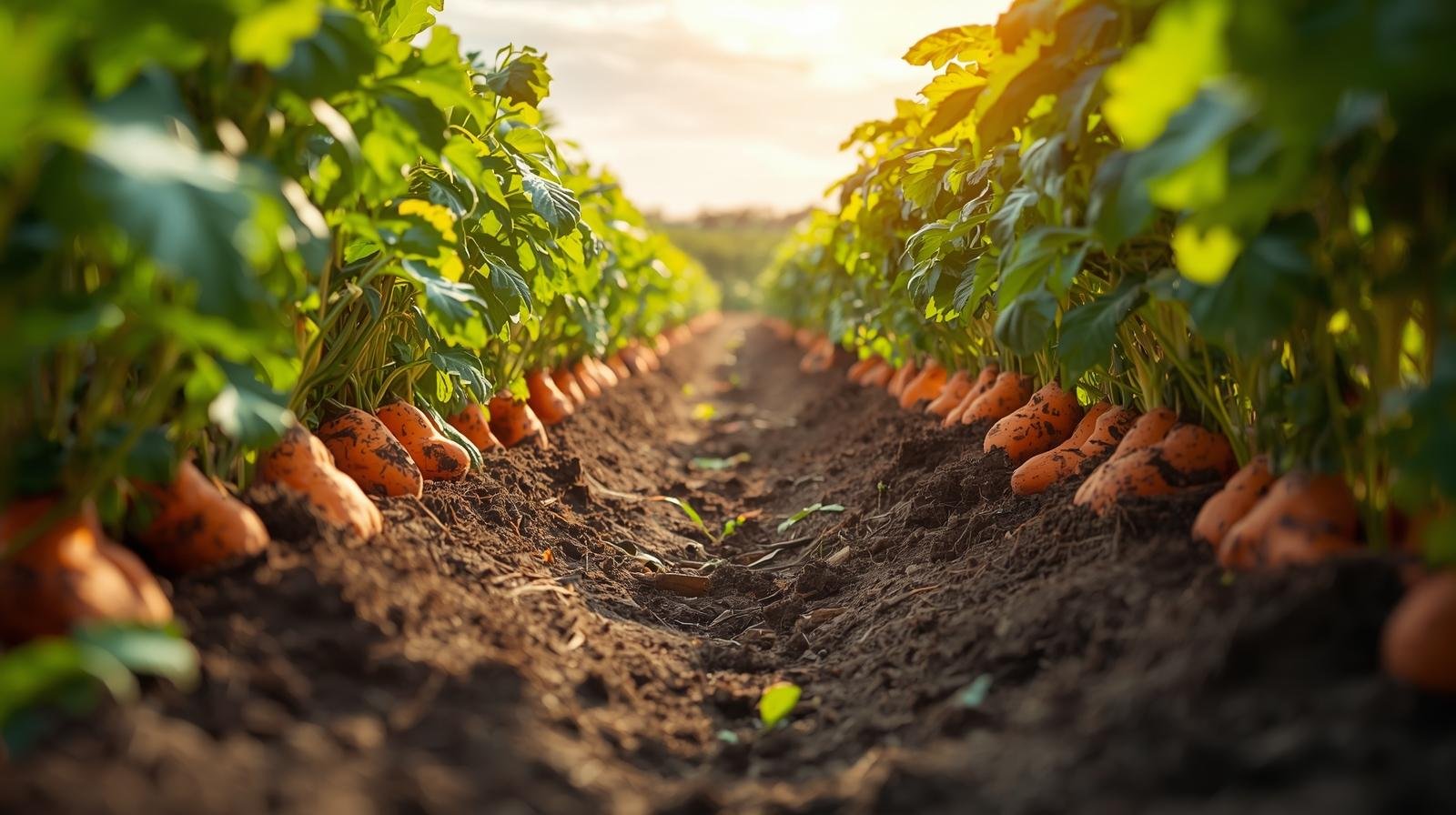
Sweet Potato Farming Guide: Complete Cultivation Method with Intercropping for Higher Profit

Sweet Potato Farming Guide: Complete Cultivation Method with Intercropping for Higher Profit

By Farming Acre – Go Green and Earn Green

Sweet potato (Ipomoea batatas) is one of the most profitable and climate-resilient root crops grown in India and many parts of the world. It is rich in carbohydrates, fiber, beta-carotene, and antioxidants, making it highly demanded in fresh markets, food processing industries, and health sectors. At Farming Acre, we believe sweet potato farming can become a strong income source for farmers when done with scientific methods and smart crop combinations.

This detailed guide explains how to farm sweet potato step-by-step and how to grow an additional fruit crop with it to maximize land use and income.

🌱 1. Climate and Soil Requirement

Sweet potato grows best in warm and humid climates.

  • Ideal temperature: 21°C – 30°C

  • Rainfall: 750–1200 mm annually

  • Sunlight: Full sun is essential

Soil:

  • Light sandy loam to loamy soil is best

  • Well-drained soil is mandatory

  • pH range: 5.8 – 6.7

Avoid heavy clay and waterlogged fields, as tubers may rot and yield reduces.

🚜 2. Land Preparation

Good land preparation ensures better tuber development.

  • 2–3 deep ploughings

  • Remove weeds and stones

  • Prepare raised ridges or broad beds

  • Ridge height: 25–30 cm

Apply 10–12 tons of well-decomposed FYM per acre before final ploughing.

At Farming Acre, we strongly recommend organic matter to improve soil structure and microbial activity.

🌿 3. Planting Material and Sowing Method

Sweet potato is grown from vine cuttings (slips), not seeds.

Vine selection:

  • Disease-free, healthy vines

  • Length: 20–25 cm

  • 3–4 nodes per cutting

Spacing:

  • Row to row: 60 cm

  • Plant to plant: 30 cm

Plant the cuttings on ridges at a slanting position and press soil gently. Irrigate immediately after planting.

Best planting seasons in India:

  • January–February

  • June–July

💧 4. Irrigation Management

Sweet potato requires moderate watering.

  • First irrigation: Immediately after planting

  • Then: Every 7–10 days in summer

  • Every 12–15 days in winter

Avoid over-irrigation, especially after tuber formation, as it may cause cracking and rot.

🌿 5. Nutrient Management

Balanced nutrition improves tuber size and sweetness.

Recommended per acre:

  • Nitrogen: 20–25 kg

  • Phosphorus: 25 kg

  • Potassium: 50 kg

Apply:

  • Full phosphorus + potassium at land prep

  • Nitrogen in two split doses (20 and 40 days after planting)

Organic alternatives promoted by Farming Acre:

  • Vermicompost

  • Jeevamrit

  • Panchgavya sprays

🐛 6. Weed and Pest Control

Weeds:

  • First weeding after 20 days

  • Second after 40 days

Mulching with dry straw or plastic mulch greatly reduces weeds and conserves moisture.

Common pests:

  • Sweet potato weevil

  • Aphids

  • Caterpillars

Control methods:

  • Neem oil spray (3 ml/L)

  • Trichoderma in soil

  • Pheromone traps

Diseases:

  • Leaf spot

  • Root rot

  • Scab

Use crop rotation, disease-free vines, and organic bio-fungicides.

🌸 7. Intercropping: Grow a Fruit Crop with Sweet Potato

To increase profit, Farming Acre recommends intercropping fruit crops with sweet potato, especially during early growth stages.

✅ Best fruit crops to intercrop:

🍉 A. Papaya (Highly Recommended)

  • Deep-rooted plant, does not disturb tubers

  • Sweet potato covers soil and controls weeds

  • Papaya starts giving income within 8–9 months

Layout idea:
Papaya spacing: 6 × 6 feet
Sweet potato planted between papaya rows

This system gives:

  • Short-term income from sweet potato

  • Long-term income from papaya fruits

🍌 B. Banana (In wider spacing)

  • Plant banana in paired rows

  • Sweet potato acts as a living mulch

  • Improves soil moisture retention

🍍 C. Pineapple (In tropical regions)

  • Sweet potato protects soil

  • Both crops grow well in sandy loam soil

Intercropping benefits:

  • Higher total yield per acre

  • Better weed control

  • Reduced soil erosion

  • Multiple income sources

⏳ 8. Harvesting and Yield

Sweet potato is ready in 90–120 days depending on variety.

Harvesting signs:

  • Yellowing of leaves

  • Cracking soil near tubers

  • Thickened roots

Uproot carefully with a spade or ridger.

Average yield:

  • 80–120 quintals per acre

  • With improved methods: 150+ quintals per acre

💰 9. Profit Potential

Estimated per acre:

  • Cost: ₹30,000 – ₹45,000

  • Income: ₹80,000 – ₹1,80,000

  • With papaya intercropping, profit can cross ₹2–3 lakh per acre annually

Value addition like chips, flour, and animal feed further increases profit.

🌍 Conclusion

Sweet potato farming is a low-risk, high-nutrition, and fast-return crop. When combined with fruit crops like papaya or banana, it becomes a powerful integrated farming model. At Farming Acre, our mission is to promote smart, sustainable, and profitable farming systems that help farmers “Go Green and Earn Green.”

If you adopt scientific sweet potato farming with intercropping, drip irrigation, and organic inputs, your farm can become both productive and future-ready.

Add a comment

Your email address will not be published. Required fields are marked *

Discover organic farming, eco-friendly agriculture, and profitable farming methods with Farming Acre. Empowering farmers to grow sustainably and increase income.
Copyright © 2026. All rights reserved with Farming Acre.