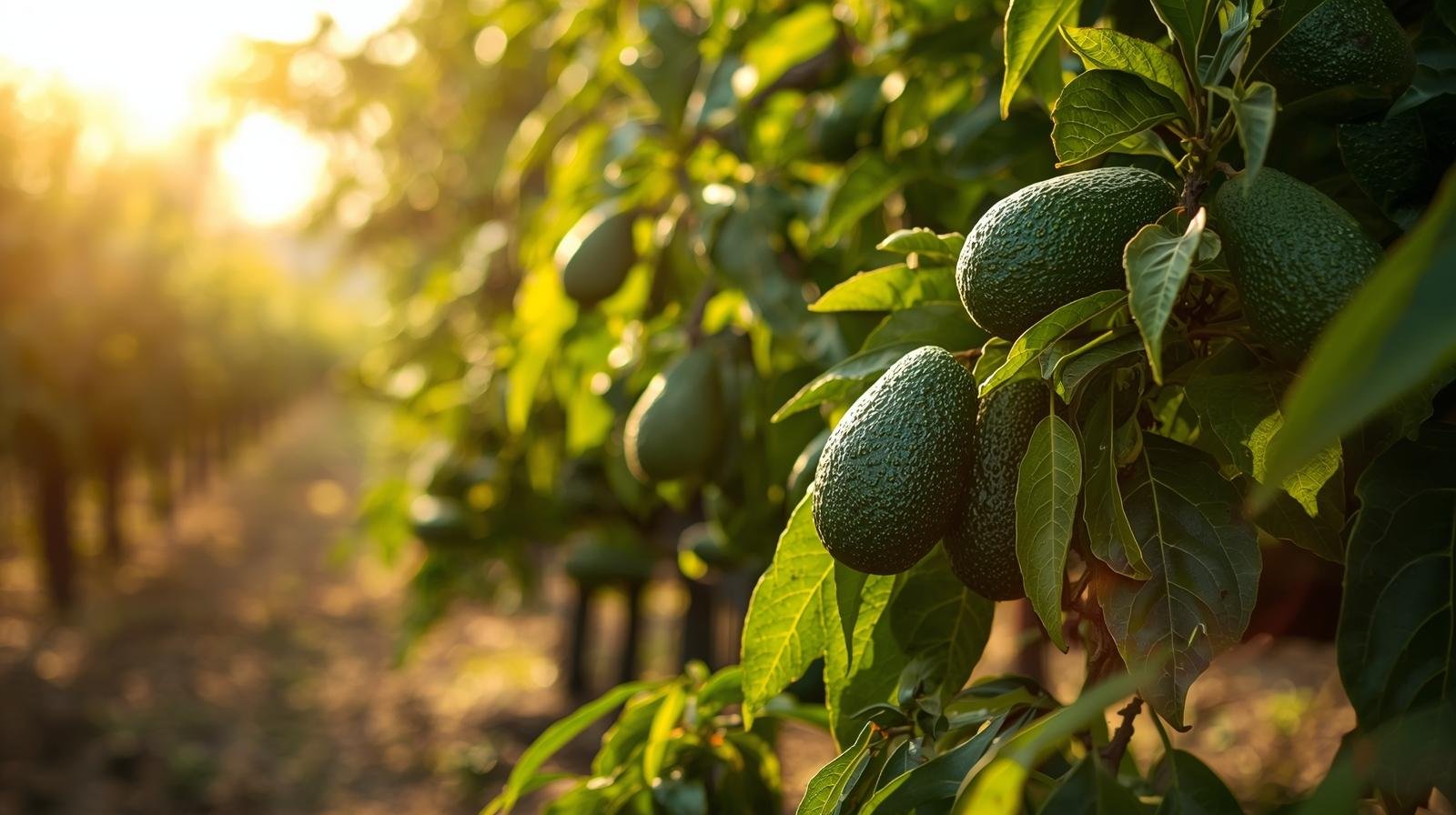
Avocado Farming Guide: Complete Cultivation Practices with Intercropping

Avocado Farming Guide: Complete Cultivation Practices with Intercropping

January 20, 2026
0 Comments

By Farming Acre – Go Green and Earn Green

Avocado (Persea americana) is emerging as one of the most profitable exotic fruit crops in India due to its rising demand in health-conscious markets, hotels, food processing industries, and export sectors. Rich in healthy fats, vitamins, and antioxidants, avocado is often called a “super fruit.” At Farming Acre, we promote advanced, sustainable, and diversified farming systems, and avocado farming fits perfectly into this modern agribusiness vision.

This detailed guide explains how to cultivate avocado step-by-step and how to grow another crop along with avocado to improve land use and early income.

🌱 1. Climate and Soil Requirement

Avocado grows best in subtropical to tropical climates.

  • Ideal temperature: 15°C – 30°C

  • Sensitive to frost and strong hot winds

  • Requires good sunlight with moderate humidity

Soil:

  • Deep, fertile, well-drained loam or sandy loam soil

  • Rich in organic matter

  • pH range: 5.5 – 7.0

Waterlogging is the biggest enemy of avocado. At Farming Acre, we strongly recommend raised beds, organic mulching, and drip irrigation.

🚜 2. Land Preparation

  • 2–3 deep ploughings

  • Remove stones and perennial weeds

  • Level the field and mark pits

Pit preparation:

  • Size: 3 ft × 3 ft × 3 ft

  • Spacing: 7 m × 7 m (commercial orchards)

Fill pits with:

  • Topsoil + 20–25 kg FYM or vermicompost

  • 1 kg neem cake

  • Trichoderma or PSB culture

Allow pits to settle for 15–20 days before planting.

🌳 3. Planting Material and Method

Avocado is propagated mainly through grafted plants for early and uniform fruiting.

Recommended varieties:

  • Hass

  • Fuerte

  • Pinkerton

  • Reed

  • Indian hybrids

Best planting season:

  • June – July (monsoon)

  • February – March (with irrigation)

Plant grafted saplings carefully without disturbing the root ball. Provide staking support and light shade in early months.

💧 4. Irrigation Management

Avocado has shallow feeder roots and needs frequent light irrigation.

  • Young plants: Every 4–5 days

  • Mature trees: Every 7–10 days

  • Critical stages: flowering and fruit set

Drip irrigation with mulching is ideal. Over-irrigation causes root rot, so drainage is essential.

🌿 5. Nutrient Management

Proper nutrition ensures strong canopy and heavy fruiting.

Per plant annually (average):

  • 20–25 kg FYM

  • 200 g Nitrogen

  • 150 g Phosphorus

  • 200 g Potassium

Split fertilizer into 3–4 doses yearly.

Organic Farming Acre approach:

  • Vermicompost

  • Jeevamrit soil drenching

  • Panchgavya spray

  • Seaweed extract at flowering

Micronutrients like zinc, boron, and magnesium improve fruit quality.

✂️ 6. Training and Pruning

  • Remove weak, crossing, and diseased branches

  • Shape young trees to develop a strong framework

  • Light annual pruning after harvest

Good canopy management improves light penetration and reduces disease.

🐛 7. Pest and Disease Management

Common pests:

  • Fruit flies

  • Thrips

  • Mites

Diseases:

  • Root rot (Phytophthora)

  • Anthracnose

  • Leaf spot

Control methods:

  • Trichoderma in soil

  • Neem oil spray

  • Proper drainage

  • Regular orchard sanitation

At Farming Acre, we emphasize preventive and biological methods for long-term orchard health.

🌱 8. Intercropping: Grow Another Crop with Avocado

Avocado takes 3–4 years to come into full production. During this period, wide spacing allows profitable intercropping.

✅ Best intercropping options:

🌿 A. Turmeric and Ginger (Highly recommended)

  • Shade-tolerant

  • High market value

  • Grow well between avocado rows

  • Provide income within 8–9 months

They also improve soil organic matter and suppress weeds.

🥜 B. Groundnut or Cowpea

  • Fix nitrogen

  • Improve soil fertility

  • Short duration crops

🍍 C. Pineapple

  • Excellent companion crop

  • Shallow-rooted

  • Tolerates partial shade

  • Good export demand

🌱 D. Vegetables (first 2 years)

  • Onion, garlic, chilli, leafy greens

  • Generate continuous cash flow

Intercropping benefits:

  • Early income

  • Better land use

  • Weed control

  • Improved soil structure

🌸 9. Flowering, Harvesting, and Yield

Avocado starts fruiting in 3–4 years (grafted plants).

  • Flowering: January–March

  • Harvest season: July–November (varies by region)

Harvest when fruits mature but still hard. Ripening occurs after harvest.

Yield:

  • Year 4–5: 30–50 fruits/tree

  • Mature tree: 150–300 fruits/tree

  • Average orchard yield: 4–8 tons per acre

Trees remain productive for 25–30 years.

💰 10. Profit Potential

Estimated per acre:

  • Initial investment: ₹2.5 – 4 lakh

  • Annual maintenance: ₹50,000 – ₹80,000

  • Annual income after maturity: ₹4 – 10 lakh per acre

Intercropping can recover a major part of early-stage expenses.

🌍 Conclusion

Avocado farming is a future-ready, health-driven, and export-oriented fruit business. When integrated with turmeric, pineapple, or legume crops, it becomes a powerful diversified farming model. At Farming Acre, our mission is to guide farmers toward high-value crops, sustainable practices, and strong market connections.

With scientific orchard planning, drip irrigation, organic nutrition, and smart intercropping, avocado farming can transform your land into a long-term income asset.

👉 Farming Acre philosophy: Go Green and Earn Green.

Add a comment

Your email address will not be published. Required fields are marked *

Discover organic farming, eco-friendly agriculture, and profitable farming methods with Farming Acre. Empowering farmers to grow sustainably and increase income.
Copyright © 2026. All rights reserved with Farming Acre.