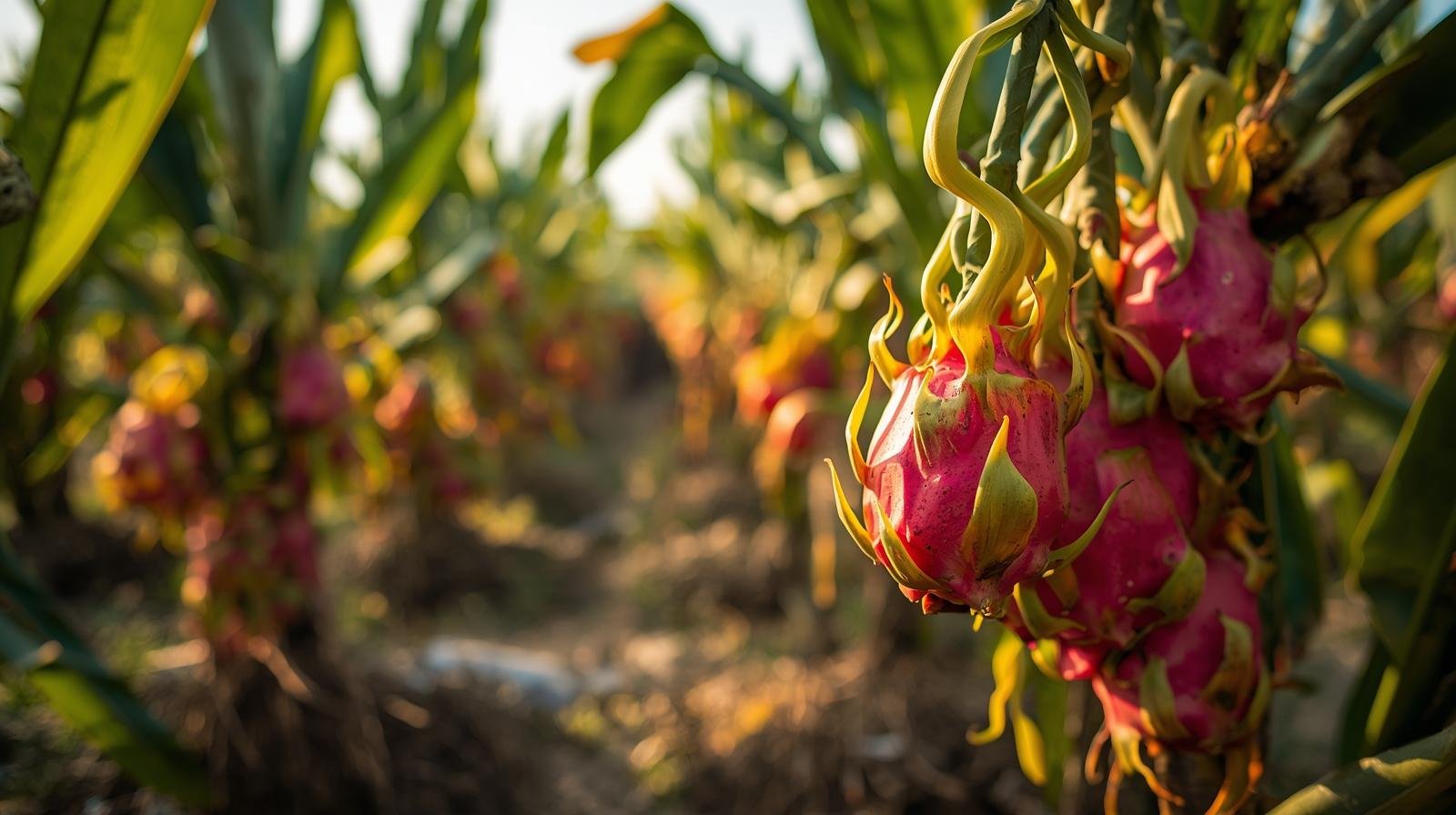
Dragon Fruit Farming Guide: Complete Cultivation Practices with Intercropping

Dragon Fruit Farming Guide: Complete Cultivation Practices with Intercropping

January 20, 2026
0 Comments

By Farming Acre – Go Green and Earn Green

Dragon fruit (Hylocereus spp.), also known as pitaya, is one of the fastest-growing exotic fruit crops in India. Because of its high nutritional value, long shelf life, export demand, and premium market price, dragon fruit has become a favorite among progressive farmers. At Farming Acre, we promote modern, high-return, and sustainable farming systems, and dragon fruit farming fits perfectly into this vision.

This detailed guide explains how to cultivate dragon fruit step-by-step and how to grow another crop along with it to increase overall farm income.

🌱 1. Climate and Soil Requirement

Dragon fruit is a tropical and subtropical cactus crop.

  • Ideal temperature: 18°C – 35°C

  • Can tolerate drought but not frost

  • Requires bright sunlight with good air circulation

Soil:

  • Well-drained sandy loam to loamy soil

  • pH range: 5.5 – 7.5

  • Rich in organic matter

Avoid waterlogging, as dragon fruit roots rot quickly. Farming Acre strongly recommends raised beds and drip irrigation for successful cultivation.

🚜 2. Land Preparation

  • Deep ploughing (2–3 times)

  • Remove stones and weeds

  • Level the land and mark pits

Pit preparation:

  • Pit size: 2 ft × 2 ft × 2 ft

  • Spacing: 10 ft × 10 ft (or 3 m × 3 m)

Fill pits with:

  • Topsoil

  • 10–15 kg FYM or vermicompost

  • Neem cake + Trichoderma

Install concrete or cement poles (5–6 ft above ground) before planting.

🌵 3. Planting Material and Method

Dragon fruit is grown from stem cuttings.

Cutting selection:

  • 30–40 cm healthy disease-free segments

  • Shade-dried for 2–3 days before planting

Plant 3–4 cuttings around each pole and tie gently with jute thread. Provide temporary shade if planting in extreme summer.

Best planting season:

  • February – March

  • June – July

💧 4. Irrigation Management

Dragon fruit needs less water than traditional fruits, but regular moisture is essential.

  • First irrigation immediately after planting

  • Then once every 5–7 days in summer

  • Every 10–12 days in winter

Drip irrigation is ideal. Overwatering must be strictly avoided.

🌿 5. Nutrient Management

Proper nutrition boosts flowering and fruit size.

Per plant annually:

  • 10–15 kg FYM

  • 100 g Nitrogen

  • 100 g Phosphorus

  • 150 g Potassium

Split fertilizer into 4 doses (Feb, May, Aug, Oct).

Organic Farming Acre model:

  • Vermicompost

  • Bone meal

  • Jeevamrit soil drenching

  • Panchgavya spray at flowering

Micronutrients like boron and zinc improve fruit set.

✂️ 6. Training and Pruning

Dragon fruit plants must be trained vertically.

  • Allow one main stem

  • Remove side shoots below the top ring

  • At pole top, allow 4–6 hanging branches

Prune diseased, old, and overcrowded stems every year to improve light and yield.

🐛 7. Pest and Disease Management

Common pests:

  • Mealybugs

  • Ants

  • Thrips

Diseases:

  • Stem rot

  • Anthracnose

  • Fruit rot

Control measures:

  • Neem oil spray

  • Trichoderma soil application

  • Proper drainage

  • Regular pruning

Farming Acre promotes integrated pest management to reduce chemical dependency.

🌱 8. Intercropping: Grow Another Crop with Dragon Fruit

Dragon fruit takes 10–12 months to fully cover poles, leaving large interspaces unused. Intercropping is highly profitable.

✅ Best intercropping options:

🥜 A. Groundnut (Highly recommended)

  • Short duration crop

  • Improves soil nitrogen

  • Generates income within 90–100 days

  • Does not disturb dragon fruit roots

This model gives quick cash flow in the first year.

🌶️ B. Turmeric or Ginger

  • Shade-tolerant

  • High market value

  • Grows well under partial canopy

🍉 C. Watermelon or Muskmelon

  • Excellent for first-year intercropping

  • Utilizes open sunlight spaces

  • Harvest before dragon fruit canopy spreads

🌿 D. Aloe vera

  • Low water requirement

  • Medicinal value

  • Long-term companion crop

Intercropping benefits:

  • Extra income

  • Weed suppression

  • Better land utilization

  • Improved soil health

🌸 9. Flowering, Harvesting, and Yield

Dragon fruit plants start flowering from 12–15 months.

  • Flowers bloom at night

  • Fruits mature in 30–35 days

Harvest when:

  • Fruit color turns bright red

  • Scales start drying at edges

Yield:

  • Year 1: Light harvest

  • Year 2 onward: 4–6 kg per plant

  • Full yield: 8–12 tons per acre

Economic life: 20+ years

💰 10. Profit Potential

Estimated per acre:

  • Initial setup cost: ₹3–5 lakh

  • Annual maintenance: ₹40,000 – ₹70,000

  • Annual income after maturity: ₹6–12 lakh per acre

Intercropping can recover 30–40% of first-year cost.

🌍 Conclusion

Dragon fruit farming is a future-oriented, export-friendly, and high-profit agricultural model. When combined with smart intercropping, it becomes even more powerful. At Farming Acre, we believe dragon fruit can transform traditional farms into modern agribusiness units.

By adopting scientific plantation design, drip irrigation, organic nutrition, and intercropping, farmers can build a strong, long-term income system.

👉 Farming Acre’s vision: Go Green and Earn Green.

Add a comment

Your email address will not be published. Required fields are marked *

Discover organic farming, eco-friendly agriculture, and profitable farming methods with Farming Acre. Empowering farmers to grow sustainably and increase income.
Copyright © 2026. All rights reserved with Farming Acre.